
Fuites du masque PPC : comprendre la gêne et retrouver du confort
Un souffle au bord du masque, une bouche sèche ou un sifflement sous PPC ? Repérez les fuites, faites les vérifications utiles et sachez quand contacter votre prestataire.

The essential distinction: carrying CPAP in the cabin and using it during a flight are separate matters. Plan treatment continuity, have the power solution checked and obtain the conditions of the airline operating each flight. A battery alone never guarantees a number of nights.
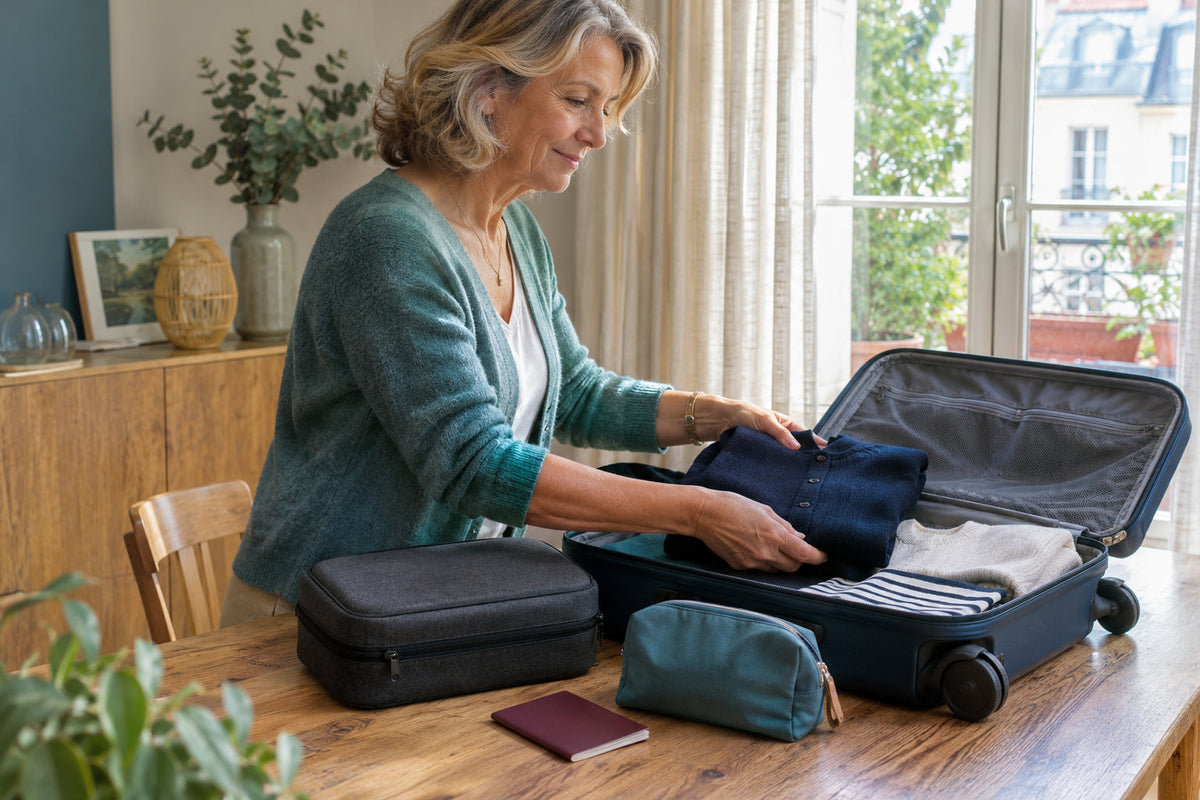
Photographic-style contextual illustration created for this guide.
Travel and treatment continuity
A well-prepared trip starts with your usual setup: machine, mask, circuit, humidification and power supply. The aim is to have usable treatment at your destination, including if a bag is delayed or a socket is unavailable. These are the checks to organise with your care provider and carrier.
Describe the trip to your care provider: length, nights away, connections, access to electricity and any remote stops. Explain whether you only intend to carry the machine or sleep with it during the journey. These details change the checks required.
If you are considering a smaller machine, do not discover a new setup on departure day. Confirm consistency with your prescription, compatible components and initial setup, then try it early enough to resolve difficulties. Do not adjust pressure or enter the clinical menu yourself.
A scenario worth planning: “What will I do if my main power supply is unavailable when I arrive?” Agree a realistic solution before travelling instead of relying on an improvised interruption of treatment.
A carrier may accept CPAP as medical equipment in the cabin without authorising its use under every condition. Registration procedures, documents, batteries and available power depend on the flight and operating airline, including when the ticket was bought through another company.
A checked example: Lufthansa distinguishes simply carrying CPAP from using it onboard, which requires advance registration; it states that onboard power cannot be guaranteed. British Airways gives a different procedure for CPAP. A response received for a previous journey is therefore not universal approval.
Request confirmation for each flight segment: medical baggage allowance, required arrangements, accepted batteries, use during different flight phases and any restrictions. Manufacturer statements about aviation compliance do not replace the carrier’s operational requirements.
Keep the replies with your documents. Our flight documentation FAQ provides an additional reference.
Keep a description of the device, model and instructions accessible, along with the prescription, professional letter or manufacturer aviation compliance letter requested by the carrier. Have copies available offline and in a language understood during the journey where necessary.
Keep essential equipment with you under the airline’s accepted conditions. If cabin baggage is sent to the hold at the gate, immediately flag medical equipment and batteries: spare lithium batteries must remain in the cabin, in accordance with applicable rules and crew instructions.
Wh and hours of treatment: watt-hours describe energy capacity. They do not directly tell you how many hours of CPAP are available. A “several nights” claim is useful only if the machine, conditions and assumptions are specified.
Have the output voltage, intended cable or converter, approved power mode and any manufacturer limitations checked. A plug fitting into a socket does not establish electrical compatibility. Do not use improvised wiring or an adapter chosen only for its shape.
Runtime varies with the machine, electrical requirements of the setup, humidification, heated tubing, conversion losses, temperature and battery ageing. Do not reduce prescribed pressure to extend a charge. Ask your care provider to assess the proposed setup and allow a margin.
For flights, give the carrier the chemistry, reference and Wh capacity of every battery. Thresholds, quantities and approvals must not be inferred from a sales listing. Protect terminals against short circuits according to instructions. A swollen, damaged or recalled battery needs appropriate handling, rather than being taken on holiday.
Empty the water chamber before transport. For AirSense 11, the instructions require a completely empty chamber during use on an aircraft or in a vehicle: movement can allow water into the machine or lead to inhalation of water. Also follow the required assembly, with an empty chamber or compatible side cover according to the approved configuration.
If humidification is particularly important to your comfort, discuss this with your care provider in advance; do not plan to fill the chamber during the flight. Airline restrictions may add to manufacturer instructions.
Flight mode concerns wireless communications, not reduced treatment pressure. Follow instructions for your machine and the crew’s requirements. AirMini instructions specify disabling Bluetooth onboard. For HumidX, keep the correct version and the 30-day limit after opening in mind, even for occasional trips.
A plug adapter changes the shape of the connection; it does not necessarily convert voltage. Compare the power supply label with the local electricity supply and have the appropriate accessory confirmed. Do not assume that a USB port or vehicle socket can power your CPAP.
When camping, place the machine on a stable, dry and ventilated surface, protected from splashes, dust and impacts. Keep openings clear. Plan a clean place for the mask and for drying parts; a damp tent differs from a bedroom.
Check socket access hours and charging opportunities before the trip. A vehicle battery or portable power station also needs verified compatibility; “12 V” alone is insufficient. Our battery and camping FAQ helps prepare the discussion. Browse available accessories after identifying the required reference.
On return, unpack and inspect the equipment, then resume the recommended care routine. If a communication mode was disabled, restore it according to the instructions so usual data transfers can resume. Report interruptions or difficulties to your treatment team.
No. Its presence does not guarantee availability or suitability for your machine, and some carriers require battery operation. Ask about your specific flight, have the chosen solution checked and provide the reserves required by the carrier.
No. That claim relies on assumptions that may differ from your machine and use. Ask for the measurement conditions, verify compatibility and arrange an appropriately supervised assessment before departure. An estimate is not a guarantee of treatment continuity throughout the trip.
Travel alone is not a reason to suspend prescribed treatment. Discuss transport or electricity constraints with your care provider beforehand. If they appear impossible to resolve, ask the professional responsible for your care for an appropriate plan rather than deciding on an interruption yourself.
Good preparation comes down to three confirmations: an approved setup, compatible power and confirmed transport conditions. Obtain them before leaving, then keep essentials accessible. For an equipment question, contact the team with the model, itinerary and proposed power solution.
References checked on 23 November 2026.
Written by PlanèteSommeil. This guide provides information and helps you prepare discussions with your care team; it does not replace an individual assessment.
Continue reading
Un souffle au bord du masque, une bouche sèche ou un sifflement sous PPC ? Repérez les fuites, faites les vérifications utiles et sachez quand contacter votre prestataire.
AirFit F20 and F40 are two ResMed full face masks: both cover the mouth and also allow breathing through the nose. Their main difference is the contact area: F20 covers the nose, whe...
A useful home sleep study starts with clear instructions, a reasonably typical night and an accurate account of what happened. Wearing the equipment overnight does not guarantee that...
Find selection criteria, compatibility details and practical advice in our FAQ.
Masks, CPAP and accessories


