
Fuites du masque PPC : comprendre la gêne et retrouver du confort
Un souffle au bord du masque, une bouche sèche ou un sifflement sous PPC ? Repérez les fuites, faites les vérifications utiles et sachez quand contacter votre prestataire.

A CPAP mask size is selected for a specific model, using its official fitting template and a fit check. An S, M or L label does not automatically transfer from one mask to another.
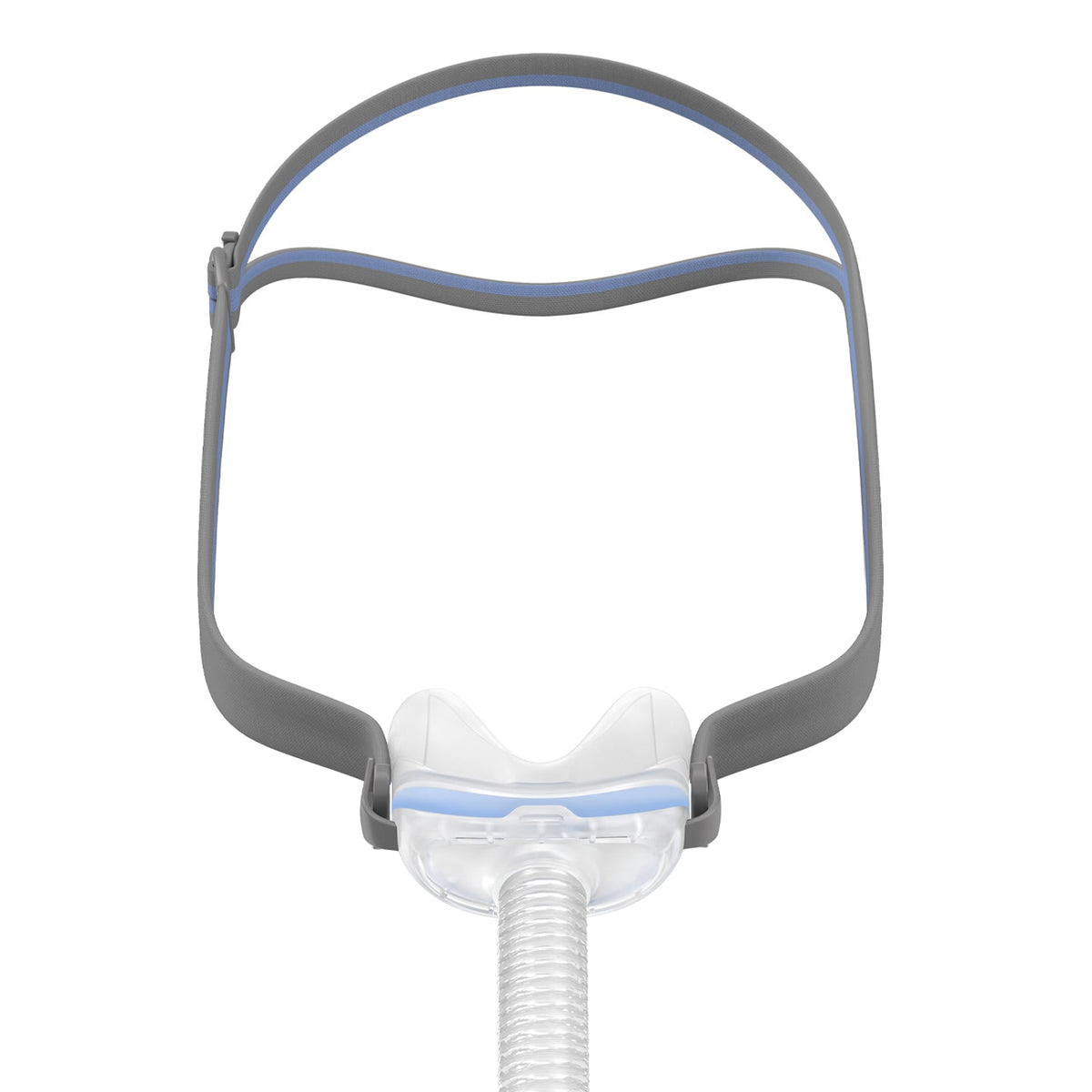
Photograph of the product shown in the catalogue.
Sizing and adjustment
You have worn medium for years, but that does not guarantee medium will fit your next mask. Cushion shape, contact areas and headgear size all play a part. The sound approach is to identify the component, check the sizing document and then confirm the result in actual use.
Record the full name shown on the mask, box or your equipment record. Similar names are not enough to establish compatibility. A clear photograph of the reference and component to replace helps distinguish a complete mask from a cushion, headgear or frame. Do not rely on colour alone.
If replacing a worn cushion on a comfortable setup, start with its current reference. If changing models, start the sizing process again. The CPAP mask sizing FAQ recalls the points to check before ordering.
Download the official document for the model from the manufacturer or a verified link. The AirFit F20 fitting template and AirFit F40 fitting template are separate documents; they do not assess the same contact areas.
If the scale check fails, the size reading is not usable. Print it again or ask for help. Measuring directly on a screen is not a reliable substitute, because zoom changes the displayed dimensions.
A template helps identify a cushion size; it cannot reproduce cushion flexibility or movement during sleep. Follow the anatomical landmarks indicated for that model. If you are between two areas or obtain inconsistent readings, have the measurement checked instead of always choosing the smaller size.
| Component to check | What its size describes | What it does not establish |
|---|---|---|
| Cushion | Contact geometry specific to the model | Comfort across every area of the face |
| Headgear | A range of support appropriate to the head | That tightening will correct an oversized cushion |
| Frame, where several sizes exist | A specific structural dimension | Interchangeability with another model |
A product listing may offer a combination of sizes rather than one single size. Check the full variant description and contents, including when there is only one selection menu.
Imagine someone wearing an AirFit F20 medium, which covers the nose and mouth. They want to try an AirFit F40, which sits under the nose and around the mouth. The contact area changes, so the letter on the old cushion cannot determine the new size.
The same reasoning applies between two nasal masks. There is no universal conversion based on sex, weight, clothing size or your previous model. The template and trial must remain specific to the proposed mask.
Fit and adjust the mask according to its instructions. Check it with CPAP running at the prescribed settings, then in your usual sleeping position. Assess tubing movement, contact with the pillow and unwanted air towards the eyes. Extra tightening is not the automatic answer.
A slipping mask, folding cushion or straps at their adjustment limit deserves checking. These signs alone do not prove a sizing error: assembly, wear and positioning may also contribute. Describe what happens to your provider.
Pain or skin injury needs reassessment. Seek advice before the problem becomes established. Do not cut the cushion or block the exhalation vents to create an artificial seal.
Correct sizing cannot make an unsuitable connector compatible or remove a contraindication to magnetic clips. If unsure, use the contact page before opening, with the reference and the problem you need to solve.
Also check the current returns policy before unsealing a device: the applicable conditions depend on the product and its condition, among other factors. Do not assume a mask opened for a trial can be returned. The aim is to resolve uncertainty before ordering and opening.
An ordinary photograph does not provide a reliable scale, and perspective distorts proportions. It can help explain discomfort but does not replace the intended template or supported measurement. Only use a measuring method validated for the model.
The current reference and size are a sound starting point if the equipment remains comfortable. Still check that the component is identical. A change in facial shape, new leaks or pain warrants a fresh check instead of automatic like-for-like replacement.
No. Headgear holds the cushion in place; it does not change its geometry. Select a compatible combination according to the mask documentation. If stability requires excessive tension, have the whole setup reviewed before ordering another component.
Take-home message: the right sequence is “exact model, checked template, identified component, supervised fit check”. A letter alone never establishes equivalence between two masks. When measurement or fit remains unclear, advice before buying helps avoid a succession of unsuitable components.
References checked on 23 November 2026.
Written by PlanèteSommeil. This guide provides information and helps you prepare discussions with your care team; it does not replace an individual assessment.
Continue reading
Un souffle au bord du masque, une bouche sèche ou un sifflement sous PPC ? Repérez les fuites, faites les vérifications utiles et sachez quand contacter votre prestataire.
AirFit F20 and F40 are two ResMed full face masks: both cover the mouth and also allow breathing through the nose. Their main difference is the contact area: F20 covers the nose, whe...
A useful home sleep study starts with clear instructions, a reasonably typical night and an accurate account of what happened. Wearing the equipment overnight does not guarantee that...
Find selection criteria, compatibility details and practical advice in our FAQ.
Masks, CPAP and accessories


