
Fuites du masque PPC : comprendre la gêne et retrouver du confort
Un souffle au bord du masque, une bouche sèche ou un sifflement sous PPC ? Repérez les fuites, faites les vérifications utiles et sachez quand contacter votre prestataire.

Key message: dryness and condensation do not necessarily need the same solution. Before buying an accessory, identify the discomfort, check the setup and have possible leaks assessed.
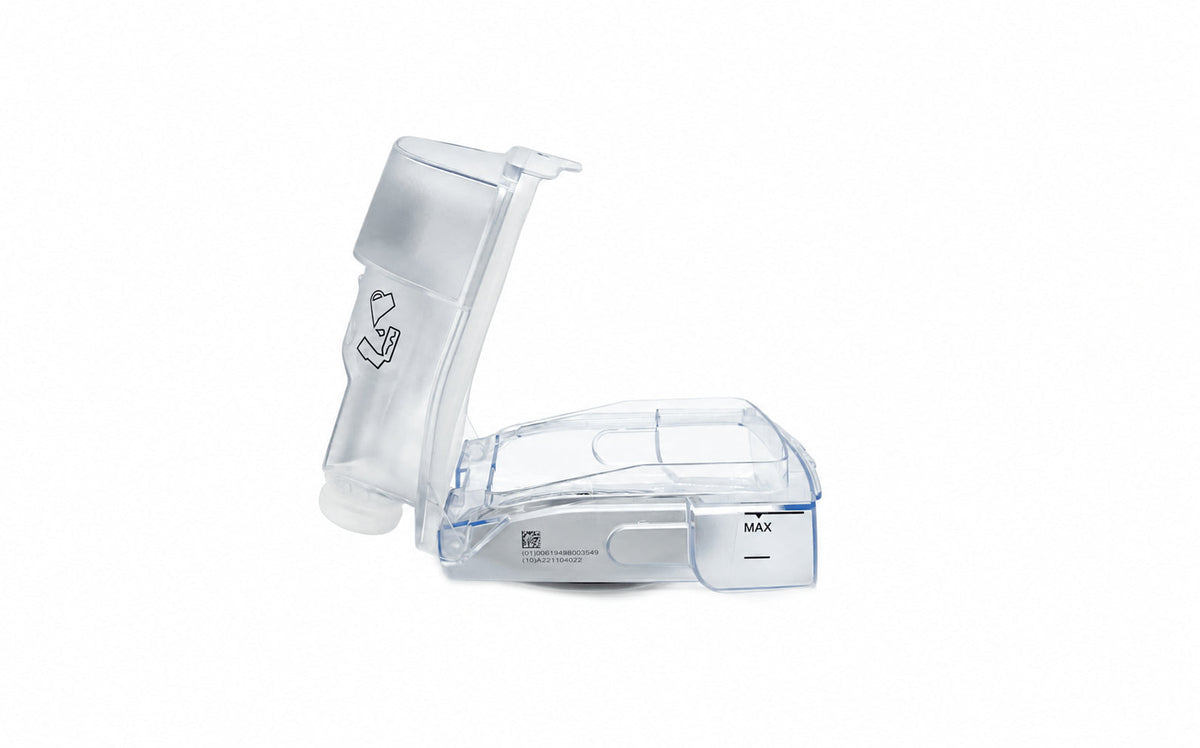
Photograph of the product shown in the catalogue.
CPAP comfort and equipment
Humidification can improve comfort for some people using CPAP, but it does not replace a suitable mask or an assessment of nasal obstruction. Identifying where the problem occurs helps avoid a sequence of random changes and prepares a clear request to your equipment provider.
Start by distinguishing four situations: dry mouth on waking, a dry or irritated nose, a blocked nose, and droplets or water noise in the tubing. They may occur together, but they are not one single fault. Explain whether the problem begins at start-up, during the night or only on waking, and whether it followed a change of mask or bedroom temperature.
Also mention a recent medicine change, a cold or discomfort already present during the day. Persistent dryness is not automatically caused by CPAP. Our article on a blocked nose at night and snoring offers further guidance without replacing a consultation.
The purpose is comfort for the lining of the nose and mouth, particularly with dryness or irritation. A humidifier does not correct an unsuitable pressure, treat every cause of a blocked nose or compensate for a substantial leak. More humidity does not always mean more comfort: the response depends on the setup, environment and individual tolerance.
There is therefore no numerical setting to recommend to everyone. Ask which comfort features your device provides and how to use them within the guidance from your team.
With a nasal interface, opening the mouth may allow some airflow to escape. Dry mouth can draw attention to this possibility, but does not confirm it. Your provider considers your experience alongside the mask type, fit and available device data. Nasal obstruction can also make treatment less comfortable and should be assessed if it persists.
Avoid improvised solutions: changing mask type without considering the whole situation, tightening straps firmly or taping your mouth shut is not a safe approach. A different interface should be discussed with your team. If marked dryness also persists during the day, causes sores or makes swallowing difficult, seek medical advice.
When moist air cools sufficiently, some water vapour becomes liquid. During CPAP this can produce droplets, gurgling or water in the mask. This condensation does not by itself show a device fault or a need to increase pressure.
Note the circumstances: a colder room, an open window, tubing against a cold surface or a changed comfort feature. Compatible heated tubing may limit cooling, but correct assembly still matters. Do not improvise a heater around the tube or cover the device. For practical action when water is already present, see our CPAP condensation questions and your user guide.
Follow the manufacturer’s procedure when handling the tub or emptying tubing, and keep water out of the device. A damaged component or water leak needs a provider check, rather than glue or a home repair.
The brand name alone does not establish compatibility. A tub or tube designed for one device generation may not fit another. The HumidAir for AirSense 11 is an example of model-specific equipment: check its reference against your device before buying. A catalogue listing is not a recommendation for everyone.
Water requirements may differ according to the tub and market version. Consult the corresponding guide rather than applying a rule found for another model. Never add essential oils, perfume, medicine or any other substance to the tub. Cleaning products and rinsing must also follow the manufacturer’s instructions. A room humidifier is not a substitute that can be connected to a CPAP circuit.
A clear request can be brief: “dry mouth mainly on waking”, or “water in the mask since the room became colder”, followed by the equipment models, start date and recent changes. Ask what should be checked first and how to assess the agreed correction. Avoid changing several things at once without coordination: it becomes difficult to tell what helps.
No. This observation alone cannot assess treatment. Water consumption depends on the system, its use and overnight conditions. Do not fill above the maximum line; request a check if consumption changes markedly or significant dryness persists.
Not automatically. First review assembly and the circumstances with your provider. If heated tubing is appropriate, its compatibility and use must be confirmed for your device.
That depends on the equipment and your comfort. A change of season or bedroom may alter the situation. Note the problem and use only accessible features explained by your team; prescribed pressures are not adjusted to solve condensation.
Start with a clear observation, check the setup, then agree on a correction compatible with your device. Buy an accessory only after clarifying the need and exact reference with your provider.
References checked on 23 November 2026.
Written by PlanèteSommeil. This guide provides information and helps you prepare discussions with your care team; it does not replace an individual assessment.
Continue reading
Un souffle au bord du masque, une bouche sèche ou un sifflement sous PPC ? Repérez les fuites, faites les vérifications utiles et sachez quand contacter votre prestataire.
AirFit F20 and F40 are two ResMed full face masks: both cover the mouth and also allow breathing through the nose. Their main difference is the contact area: F20 covers the nose, whe...
A useful home sleep study starts with clear instructions, a reasonably typical night and an accurate account of what happened. Wearing the equipment overnight does not guarantee that...
Find selection criteria, compatibility details and practical advice in our FAQ.
Masks, CPAP and accessories


