
Fuites du masque PPC : comprendre la gêne et retrouver du confort
Un souffle au bord du masque, une bouche sèche ou un sifflement sous PPC ? Repérez les fuites, faites les vérifications utiles et sachez quand contacter votre prestataire.

Warning signs, sleep studies, and main treatments: key information to help you understand sleep apnea and prepare your questions.
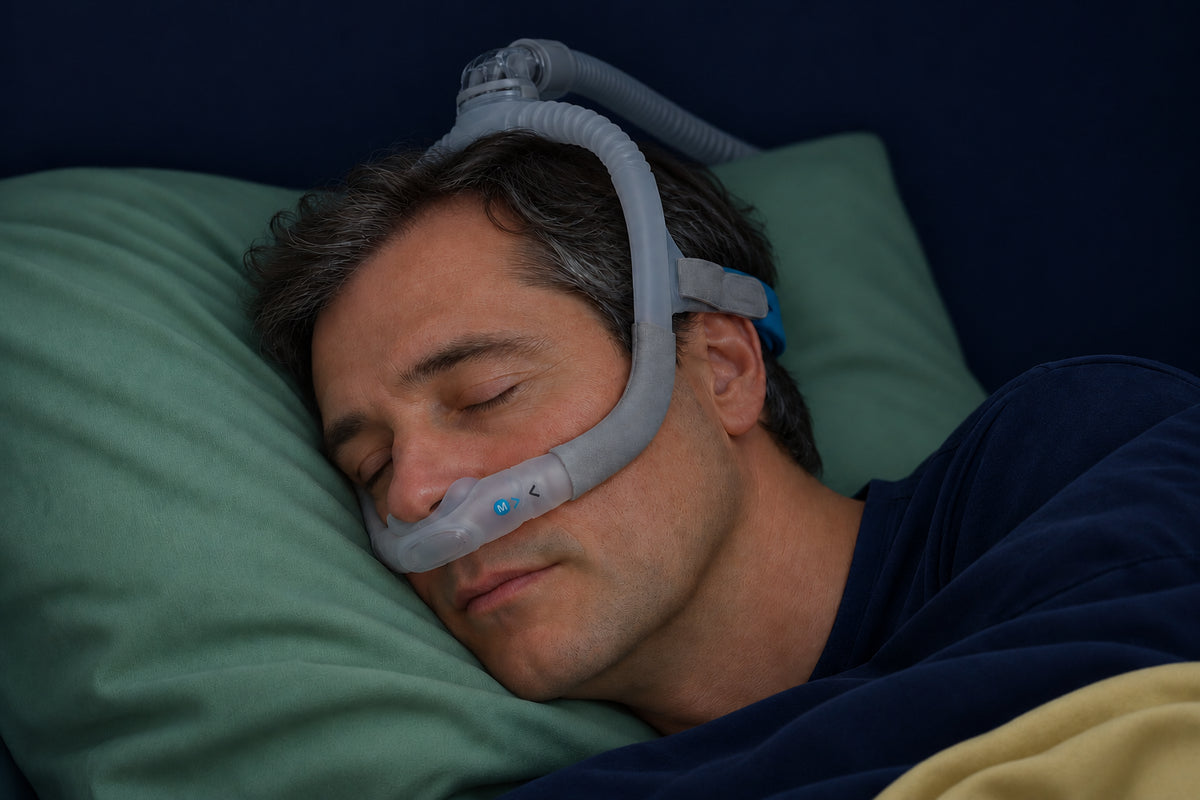
Have you just received a sleep apnea diagnosis, or are you wondering about your nights? Understanding this disorder is a first step toward knowing who to turn to and what solutions may be available.
Symptoms, tests, treatments: here are the essential points to help you understand.
This article provides general information and does not replace the advice, diagnosis, or follow-up of a healthcare professional. It mainly concerns obstructive sleep apnea in adults.
Sleep apnea is characterized by repeated interruptions in breathing during the night. An apnea is a complete stop in airflow; a hypopnea is a decrease in breathing.
In its obstructive form, the upper airways narrow or close during sleep. This is known as obstructive sleep apnea-hypopnea syndrome, or OSAHS.
Why can you feel tired upon waking?
These episodes can cause micro-arousals and drops
in oxygen levels. Sleep becomes less continuous,
sometimes without you remembering that you woke up.
There are also central apneas, related to a disruption of the respiratory control system. Their assessment and management are different.
Loud snoring, breathing pauses observed by a loved one, or daytime sleepiness may warrant a consultation.
Click on each card to discover the signs to look out for.
One symptom is not enough to make a diagnosis. Snoring alone does not necessarily mean sleep apnea. Report the signs that persist to your doctor, especially breathing pauses and drowsiness.
If you are at risk of falling asleep at the wheel, do not drive and seek medical advice.
Your doctor will ask you about your symptoms and sleep habits. They may then refer you for a sleep study tailored to your situation.
This test records several respiratory parameters, notably airflow, respiratory effort and blood oxygen levels.
It can be performed at home and may help diagnose obstructive sleep apnea. It does not directly measure sleep stages.
This more comprehensive test records breathing, but also brain activity, eye movements and muscle activity.
It allows sleep to be analyzed and may be offered especially if polygraphy does not allow for a conclusion or if another sleep disorder is suspected.
Questionnaires such as STOP-BANG or Berlin help assess the risk of apnea. The Epworth scale assesses daytime sleepiness.
They provide guidance, but do not confirm the diagnosis. They do not replace a consultation or a sleep study.
Fragmented sleep can affect alertness, concentration, and quality of life. Drowsiness can also increase the risk of accidents.
In the long term, untreated obstructive apnea is associated with an increased risk of hypertension and cardiovascular diseases. These consequences do not always occur: a medical assessment allows you to evaluate your situation.
The choice depends on the severity of the apnea, your symptoms, your state of health, and the test results. Your doctor determines the appropriate treatment.
CPAP sends pressurized air through a mask to keep the airways open during sleep.
It is notably offered for severe forms and certain moderate forms. The mask can be nasal, full-face, or facial, depending on needs and comfort.
Discomfort, leaks, or dryness should be reported to the team supporting you so they can improve the comfort of the treatment.
This device holds the lower jaw slightly forward during the night to facilitate airflow.
It may be offered in certain situations, after a medical and dental evaluation. Its effectiveness must be monitored.
Depending on your situation, the doctor may advise weight management, suitable physical activity, reducing evening alcohol consumption, or positional therapy.
Certain medications can promote nighttime respiratory disorders: talk to your doctor about them, without changing your treatment on your own.
These measures can complement the management, but do not automatically replace the prescribed treatment.
Our screening questionnaire can help you take stock of your symptoms.
Take the sleep testThis questionnaire does not make a diagnosis. If you have already been diagnosed, continue the follow-up and treatment prescribed by your doctor.
To learn more: symptoms and diagnosis of sleep apnea and treatments for obstructive sleep apnea on the French Health Insurance website.
Continue reading
Un souffle au bord du masque, une bouche sèche ou un sifflement sous PPC ? Repérez les fuites, faites les vérifications utiles et sachez quand contacter votre prestataire.
AirFit F20 and F40 are two ResMed full face masks: both cover the mouth and also allow breathing through the nose. Their main difference is the contact area: F20 covers the nose, whe...
A useful home sleep study starts with clear instructions, a reasonably typical night and an accurate account of what happened. Wearing the equipment overnight does not guarantee that...
Find selection criteria, compatibility details and practical advice in our FAQ.
Sleep apnoea and screening


