
Persistent insomnia: understanding CBT-I and preparing for treatment
When usual advice is no longer enough, CBT-I offers structured insomnia treatment. Learn what it addresses, how to prepare and why care needs to be personalised.

Melatonin is not a universal answer to difficult nights. Understand its role, the limitations of supplements and the checks that matter before buying.
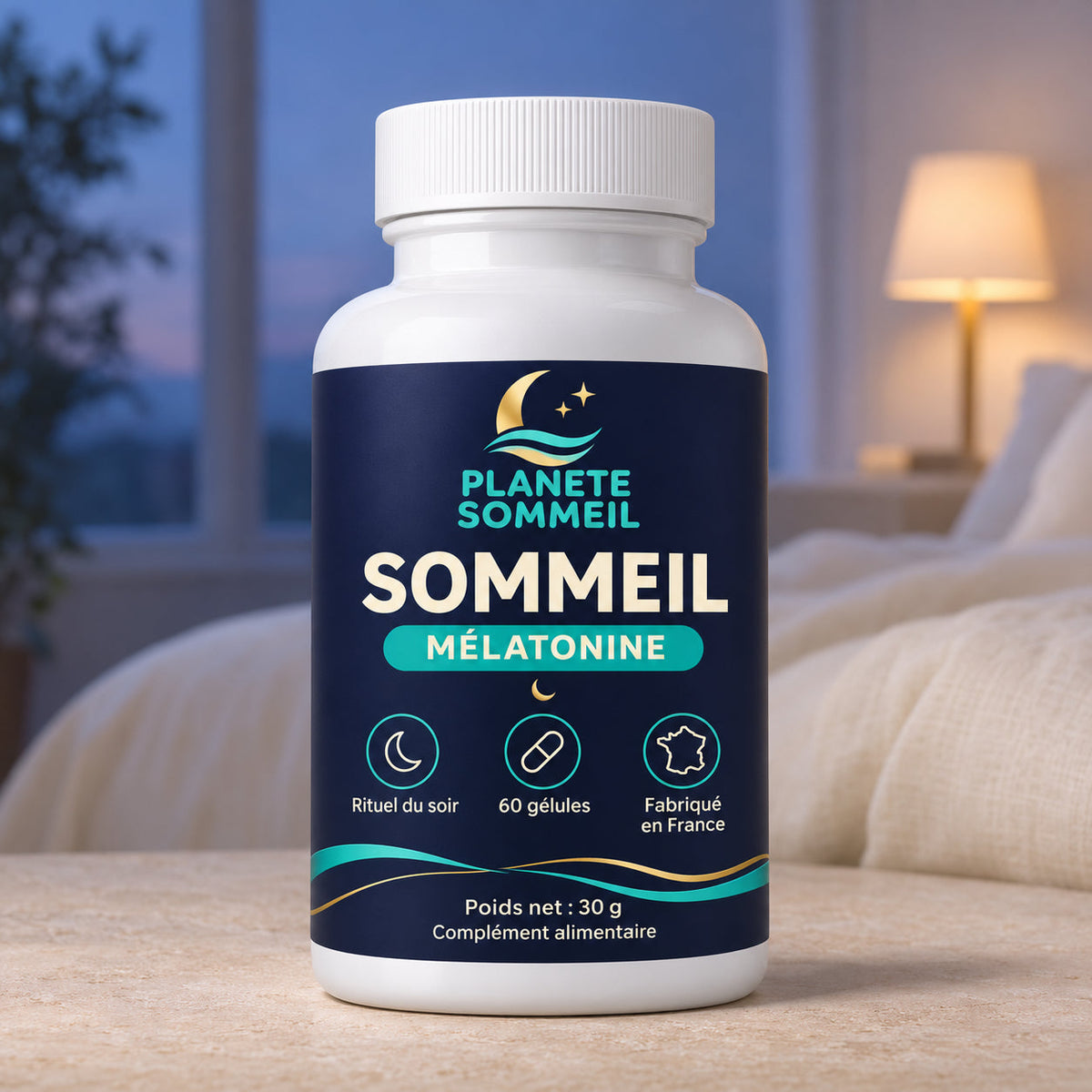
Photograph of the product shown in the catalogue.
Food supplements · Understand before choosing
Melatonin often comes to mind as soon as sleep becomes difficult. Yet struggling to fall asleep, spending a long time awake during the night and fighting sleepiness the next day raise different questions. Before comparing bottles, clarify the problem and check whether a supplement is actually appropriate for your circumstances.
Your body produces melatonin in a rhythm influenced particularly by light and darkness. This signal helps organise the sleep-wake cycle. It is not a switch that can cancel stress, pain or a breathing disorder during sleep.
A formula containing a hormone therefore does not show that your difficulty is caused by a shortage of that hormone. To understand the different influences, read our article about sleep cycles and rhythms.
Ask a precise question: do you want to fall asleep more easily at your usual bedtime, understand night-time awakenings, or regain energy despite apparently sufficient nights? Note when the problem occurs, how often and what changes during the day. This is more useful than a broad aim such as “sleep better”.
Difficulty falling asleep may accompany shifted schedules, worries, stimulants or another problem. Snoring with breathing pauses, choking or unusual sleepiness needs assessment. A supplement cannot establish whether breathing during sleep is normal.
Our short answer about melatonin’s limitations helps distinguish these situations without making a diagnosis.
Both medicines and supplements can contain melatonin, within different frameworks. A prescribed formulation, its indication and release mechanism cannot be replaced by an online capsule solely because the milligram figure looks similar. If you already have a prescription, seek advice before making a substitution.
An authorised food health claim describes an effect under specified conditions; it is not permission to treat a disease. The European framework includes a claim about time taken to fall asleep for a 1 mg portion, with specified information about consumption before bedtime. That is a regulatory condition for using the claim, not a personal recommendation to take that dose.
A promise to cure insomnia or treat sleep apnoea is therefore not a valid reason to select a supplement.
Check the amount per recommended serving, the number of units in that serving and the other substances. Adding plants or nutrients does not automatically make a formula more appropriate than a simple one. Each ingredient also brings precautions to consider. To limit interactions, Anses recommends preferring simple formulations and avoiding several supplements at the same time. This caution remains relevant even when a combination seems appealing in marketing terms.
On a page such as Sommeil Mélatonine with lemon balm and griffonia, examine all ingredients, instructions and warnings. The link helps you read a formula; it does not mean the product suits everyone.
Anses distinguishes situations in which supplements should be avoided from those requiring medical advice before use. These include pregnancy and breastfeeding, children and adolescents, certain conditions and tasks requiring sustained alertness.
This distinction concerns food supplements. A prescription for a particular indication involves a different assessment: do not transfer advice given to a relative or a child receiving treatment to your own circumstances. Our FAQ about the groups concerned covers these points.
Before starting, gather the names of all medicines and supplements, including occasional ones. A doctor or pharmacist can check combinations. Doing this first avoids discovering after purchase that several products already provide the same substance.
Follow the instructions for the chosen product. Anses recommends occasional use of melatonin supplements because long-term consumption remains uncertain. A subscription or a large pack is not a reason to continue something that is no longer useful.
Keep a simple note of the difficulty you hoped to address and any change: ease of falling asleep, unwanted symptoms and how you feel on waking. If an adverse effect occurs, stop the supplement and seek advice; do not drive when sleepy. Persistent or worsening problems call for assessment, not an automatic increase in dose.
Do not repeat a dose on your own initiative. Instructions, timing and the next day’s activities matter. Repeated awakenings deserve an assessment of their cause.
No. A plant or naturally derived substance can cause adverse effects or interact with treatment. The complete ingredients and your circumstances matter more than that description.
No. It does not keep the airway open and cannot replace prescribed care. Persistent insomnia may, for example, require CBT-I tailored by a trained professional.
Your next step may be reading a label, asking a pharmacist or arranging a consultation, depending on the difficulty. To prepare a product choice, use our supplement selection guide, then compare its suggestions with the actual ingredients and precautions. For persistent difficulties, assessment comes before another bottle.
References checked on 23 November 2026.
Written by PlanèteSommeil. This guide provides information and helps you prepare discussions with your care team; it does not replace an individual assessment.
Continue reading
When usual advice is no longer enough, CBT-I offers structured insomnia treatment. Learn what it addresses, how to prepare and why care needs to be personalised.
Envie de dormir après le déjeuner ? Explorez les repères d’une sieste courte, ses effets au réveil et les situations où mieux vaut demander un avis.
Un souffle au bord du masque, une bouche sèche ou un sifflement sous PPC ? Repérez les fuites, faites les vérifications utiles et sachez quand contacter votre prestataire.
Find selection criteria, compatibility details and practical advice in our FAQ.
Insomnia, falling asleep and waking at night


